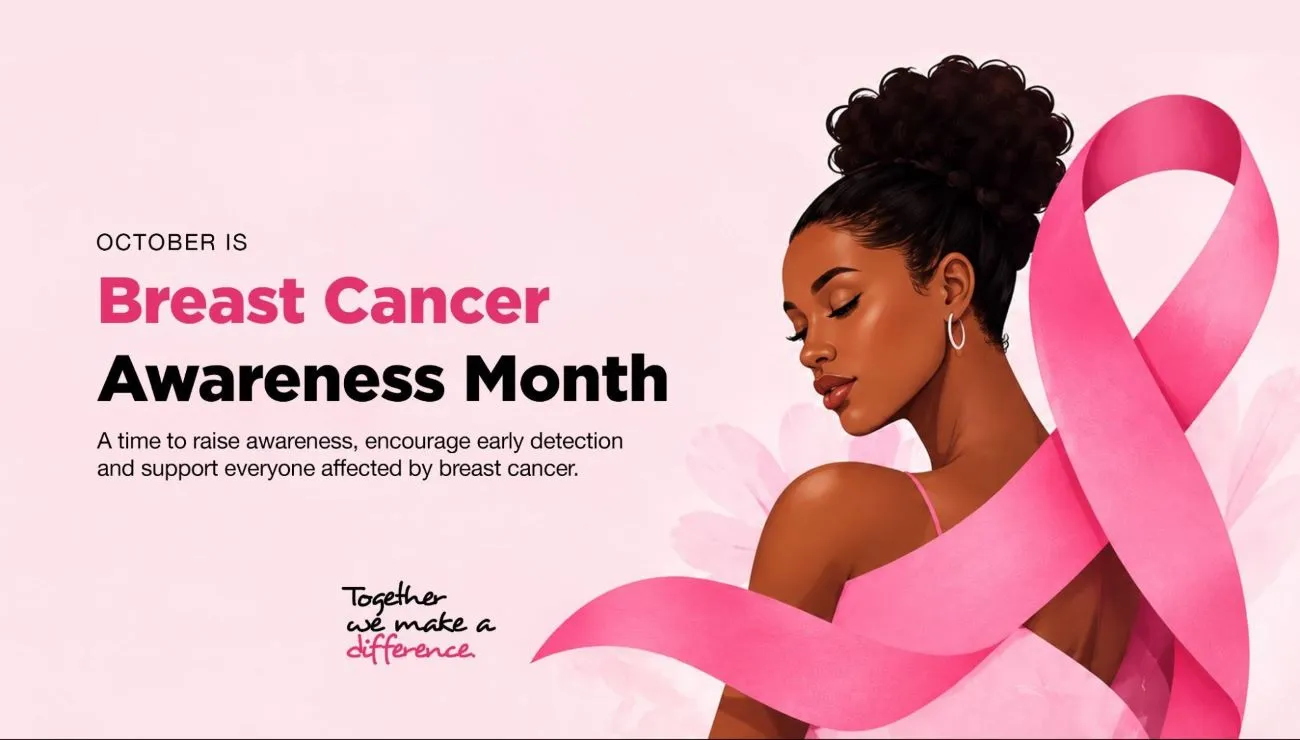
October is Breast Cancer Awareness Month, but conversations about breast health shouldn’t end when the month does.
Breast cancer affects millions of people worldwide. According to the World Health Organization, an estimated 2.4 million women were diagnosed with breast cancer in 2024. Yet, despite how common it is, many people remain unsure about the signs to look for, when to get checked, or whether they’re at risk.
This October, let’s change that.
Know What to Look For
One of the most important steps you can take is understanding what is normal for your body.
Breast cancer doesn’t always present the same way. Some people notice a lump, while others experience changes in the appearance of their breast or nipple.
Signs to look out for include:
- A new lump or thickening in the breast or underarm.
- Changes in breast size or shape.
- Dimpling, redness, or unusual changes to the skin.
- Changes in the nipple or surrounding area.
- Unusual nipple discharge, particularly if bloody.
Not every breast lump or change is cancerous. However, any new or unusual change deserves medical attention. Don’t wait for a lump to become painful before seeking advice.
Does Breast Cancer Run in Your Family?
Family history can increase your risk, but here’s something important to understand: you can develop breast cancer without having a family history of the disease.
Age and certain genetic factors can influence risk, but breast cancer can affect women at different stages of life. Men can also develop breast cancer, although it is much less common.
Knowing your family’s medical history and discussing your personal risk with a healthcare professional can help you make informed decisions about screening.
Early Detection Matters
Early detection can make a significant difference in breast cancer outcomes. When cancer is identified early and appropriate treatment begins promptly, the chances of successful treatment are generally better.
Get familiar with how your breasts normally look and feel, and speak to a healthcare professional if you notice anything unusual. Ask about appropriate screening for your age and personal risk.
Remember, being familiar with your breasts is not a substitute for recommended screening, and early breast cancer doesn’t always cause noticeable symptoms.
Awareness Is More Than a Pink Ribbon
Breast Cancer Awareness Month is about more than wearing pink. It’s about encouraging conversations that might otherwise be avoided, sharing reliable information, supporting those navigating a diagnosis, and making it easier for people to seek help.
If someone you know is affected by breast cancer, a little compassion goes a long way. Listen without judgement, offer practical support, and respect their individual experience.
And if you’ve been putting off a health check, let this be your reminder to take that step.
This October, Make Awareness Count.
Know the signs. Understand your risk. Encourage someone you love to prioritise their health.
Because awareness matters most when it leads to action.
Learn more: Explore the World Health Organization’s breast cancer fact sheet for further information on symptoms, risk factors, early detection, and treatment.
World Health Organization’s breast cancer fact sheet
Editorial note: This article is for general awareness and does not replace professional medical advice.