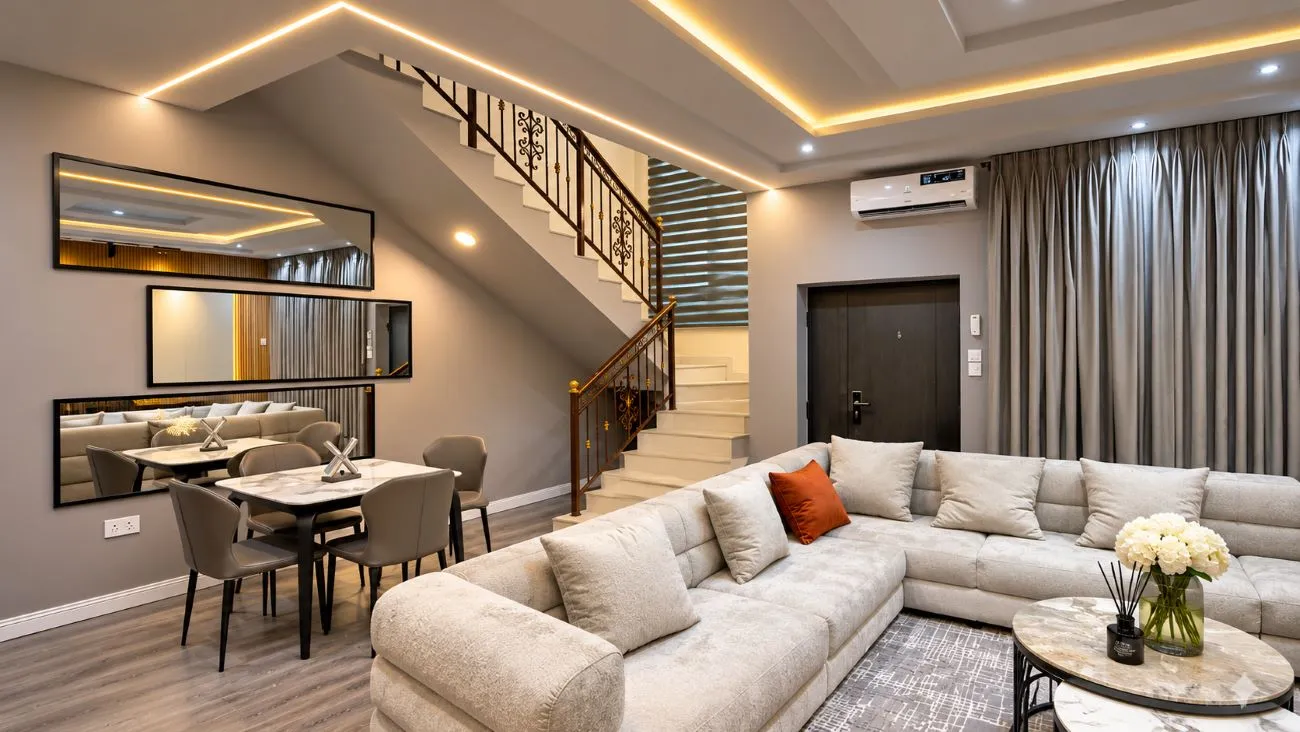
Founders don’t start a company by hoping for the best. They think about revenue, costs, break-even and growth, and they track the numbers.
An investment apartment deserves the same discipline. It earns money, it costs money to run, it has a point where it starts to pay for itself, and it can grow over time. Treat it like a small business and you make sharper decisions than someone who treats it as a one-off purchase.
Here is a playbook for running your apartment like a startup.
Revenue: choose your business model
Every startup has a revenue model. An apartment has two main ones.
| Annual rental | Shortlet | |
| Income pattern | Fixed rent, paid yearly | Nightly rate, varies with bookings |
| Predictability | High | Lower, depends on occupancy |
| Upside | Steady | Higher, if well run |
| Effort | Light | Heavier: guests, cleaning, listings |
| Suits | Hands-off owners | Active or well-supported owners |
The shortlet market is large and growing. One market report estimated Lagos shortlet revenue at about ₦281 billion in 2025, up from about ₦264 billion in 2024. In Lekki Phase I, the top-earning shortlet area, units averaged roughly 66% occupancy at around ₦226,000 a night. Other datasets show a much lower typical occupancy across Lagos, around 41%.
The lesson is that results vary widely with location, unit, pricing and management. Don’t assume the best case. Plan with the realistic one.
Costs: know your burn rate

Startups fail when founders ignore costs. The same is true of apartments. The rent or nightly rate is only the top line. These are the costs that shrink it.
- Service charge. Covers security, water and common-area power.
- Power backup. Diesel and generator costs add up quickly where grid supply is unreliable.
- Repairs and maintenance. Humidity and heavy use take their toll.
- Management fees. If someone runs the unit for you, they take a share.
- Vacancy. Empty weeks and months earn nothing.
- Tax. Rent paid by corporate tenants can be subject to 10% withholding tax.
- Shortlet extras. Furnishing and its depreciation, cleaning, utilities and listing-platform fees.
These costs explain why gross and net returns differ so much. One 2026 analysis put typical gross rental yields for Lagos residential property at roughly 5% to 8%, falling to about 3% to 5% after running costs. Your own numbers will differ, but the gap is real, so build it into your plan from day one.
Break-even and net yield: the two numbers to track
Founders watch two numbers closely: when they break even, and what they actually earn. Apartment investors should too.
Net yield Net yield = (annual income − annual costs) ÷ purchase price × 100
It tells you what the unit really returns, after costs, as a percentage of what you paid.
Break-even occupancy (shortlets) Break-even occupancy = annual costs ÷ (nightly rate × 365)
It tells you how full the unit must be before it stops losing money.
A simple illustration (made-up numbers to show the method, not a forecast):
- Purchase price: ₦120 million. Annual income after costs: ₦8.4 million. Net yield: 7%.
- Annual costs: ₦6 million. Nightly rate: ₦80,000. Break-even: 75 nights a year, about 21% occupancy. Anything above that is profit.
For context, one 2026 market report estimated net yields of roughly 6% to 9% for gated apartments in Gbagada, a neighbouring mainland area. Yields depend heavily on location, unit type and how well the unit is run, so run your own numbers before you buy.
Growth: where the upside comes from
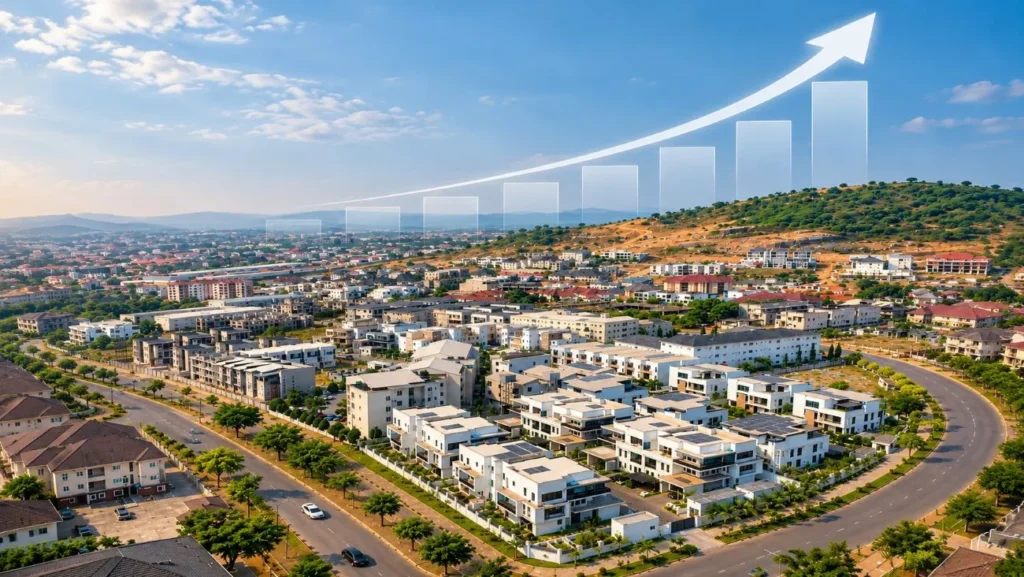
A good startup grows. A good apartment can too, in three ways.
- Appreciation. Central, well-built homes in areas with limited supply tend to hold and build value over time. Location is your moat. A prime mainland address with good access to business districts, schools and the airport keeps demand strong.
- Better operations. Smarter pricing, better reviews, lower vacancy and tighter costs raise income without raising your purchase price.
- Scale. Many investors reinvest income from one unit toward the next, building a small portfolio step by step.
Plan your exit too. A clean title and proper documentation make a unit far easier to resell or pass on, so treat paperwork as part of the investment, not an afterthought.
No property guarantees growth. Returns depend on the economy, affordability, infrastructure and competition from new supply, which is why entry price and location matter so much.
The founder’s checklist
Before you buy, run through this list:
- Pick your revenue model. Annual rental, shortlet, or a mix over time.
- List every cost. Service charge, power, repairs, management, tax and vacancy.
- Calculate net yield. Use the real price and realistic income, not the best case.
- Work out break-even. Know how full or how rented the unit must be to cover costs.
- Check the location. Access, demand and limited supply protect your income.
- Verify the paperwork. Clean title and proper approvals protect your exit.
Build it with TaureanMax
At TaureanMax, we develop apartments in Lagos, a central mainland address near Ikeja, Maryland, Ilupeju and Gbagada. Our homes come with proper title, structure and finish, and the same unit can work as an annual rental for steady income or as a shortlet for higher upside.
If you want to run the numbers on a TaureanMax apartment, reach out to the team and we will take you through it.
This post is general information, not financial or legal advice. Figures are estimates from public sources and illustrations, not projections or guarantees. Speak to a qualified adviser before investing.